Urgent Messages

1.  From the Olympics

In the opening and closing ceremonies at the Olympics many speakers, notably IOC President Thomas Bach, pointed out the importance of the Olympics as a symbol of what can be possible when all countries of the world to come together in peace.  That sounds nice, but it’s probably more apt to think about what happened with the original version of the Olympics, which persisted for quite some time. That message is not so rosy.

The original Olympics functioned even more as a symbol of peace, because there was an actual truce during the Olympic period.  But the overall lesson of the Olympic experience was that good feelings are not enough.  The Olympics did not prevent the horrendously bloody and unnecessary Peloponnesian War, fought between prime participants Athens and Sparta. 

Symbols aren’t enough.  If we don’t work at peace, it won’t happen.  There are more than enough parallels of that past with the current situation between the US and China.  If you want peace you need to remove reasons for war.

2.  From the fires and floods worldwide:

Messaging about effects of climate change has been more than a little confused.   We read about how front-line communities will bear the worst of climate issues (true enough but that makes it someone else’s problem).  We see maps of how different countries or regions will be better or worse off.  The NYTimes once had an article asking readers to plug in numbers to see if they were rich enough to escape the worst.  The most frequent objection to the Paris Accords is that we need to go back and renegotiate a better deal.

Nature is telling us something else.  We’re all in this together, and there is nowhere to hide.  Scientists have correctly indicated the directions of change.  But the world has never been here before, so it’s impossible to predict every bad thing that is going happen and where.

What’s more, carbon dioxide just accumulates in the atmosphere, so climate effects are going to continue getting worse until we can stop burning fossil fuels.  There will be more and more unexpected phenomena with more and more damaging results.   All the talk of taking CO2 out of the atmosphere is not going to produce results any time soon (and even if it works will itself take monumental amounts of energy).  So there’s only one answer—migrating the world’s energy requirements to sustainable sources.

This has to happen worldwide and we have to work together.  It may be contrary to all of our normal modes of behavior, but if we don’t all win we’re going to lose.

In the end the two messages are largely the same. We’ve fought two world wars, and now we’ve now got a third one against climate change. We have to learn how to behave when we’re all–unavoidably–on the same side.

Patterns of Thought

A friend of mine once told me a simple story:  as a teenager he found out that as his body grew and aged, many of his body’s cells would die and be replaced.  He found it a little scary to think that his body would change from now to some different future version of himself.  Then he thought—you can change out hard drives and even memory sometimes from working computer applications.  So it’s really not so odd that happens to the body too.  As with the application, a person’s consciousness continues on.

That teenage revelation wipes away centuries of philosophical speculation about what makes for personal identity and mind-body duality.  My friend was quite a smart guy, but that wasn’t the point.  The issue was that he had a model for thinking about those issues, and that model simply hadn’t been available earlier. 

Earlier generations thought about something called soul, but they had a hard time coming up with a description of what that was.  They knew it was different (one thinks of medieval paintings where the soul departs as a puff of smoke from a dying body), but there was nowhere to put it.  They needed God or some other ineffable external answer to explain it.  Science wasn’t much help, because there was no physical organ that could be identified with the soul.  However today we are confronted regularly with software processes (without physical manifestation) running on execution environments.  While there is a lot we still don’t know about how the brain works, there is no question that consciousness is such a system.  Soul, in that sense, is real—despite persisting confusion on the subject.

You can push this further.  Plato worried about forms, the abstractions we use to understand reality.  In what sense are they real objects?  We use them, but generalities by definition can’t be represented by specific physical objects.  That’s the same issue.   Any software system has internal objects that it operates upon.  Those are perfectly real within the operation of the application, but they have no physical presence.  There is a lot still to be learned about the objects of consciousness, but you don’t have to wonder about where to look.  

That leads to many interesting questions for both philosophy and science.  What can we say about the different classes of objects of thought?  What is specifically human?  Which of those objects are universally human (what is beauty?), what are hereditary but not universal, what are purely personal, as we each classify our experience.  Maybe it’s not the objects but the way of distinguishing them that’s universal?  (A child can learn what a dog is from very few examples.)  What exactly is unique about the cerebral cortex, and to what extent is it a blank slate at birth?  Is it possible that we are actually loading the equivalent of DNA-encoded software!?

To continue, another area where science helps with patterns of thought is probability.  We don’t like to think that way, but life is all about probabilities. Quantum mechanics tells us that even physical reality is in fact (at least at a microscopic level) indeterminate.  All you can say is that a quantum object may be in one of a number of states with given probabilities.  The point here is not that quantum mechanics itself governs our daily lives—it usually doesn’t.  But the world requires much more probabilistic mindset than we like to think.

We want badly to live in a world of causality, where we can organize our lives about “this does that”.  When someone gives us probabilities, we tend to react by taking the most probable item to be a sure thing.  And when causality breaks down we’re uncomfortable.  I think about the novel “The Goldfinch” where a particular immoral act ends up having good consequences, and the narrator announces that morality is a sham.

The world we live in is fundamentally probabilistic, and that affects many classical concerns.  Essentially all discussions of freewill and predestination tacitly assume that causality is straightforward.  In fact not even an all-powerful God can know exactly what is going to happen.  A human being’s current state includes everything in memory and all current impulses, conscious or unconscious.  What happens as a result of all of that is not only phenomenally complicated, it is fundamentally non-deterministic. 

The same kind of reasoning applies in many different areas—morality or political theory, say.  Much as we would like to live in a world where we can identify absolute good, that’s just the wrong model for reality.  The best we can do is probabilities in particular circumstances.

Finally, quantum mechanics is also an example of how we can get deluded by inappropriate application of scientific models.  All of the endless discussions of multiple universes and alternative realities are unsubstantiated nonsense.  When a quantum object is described as being in one of a number of possible states (because we haven’t checked yet), that doesn’t mean those potential states are all real.  It’s a trick of language—an unobserved state is not a state, it’s just part of a mathematical model for what might or might not happen.  There is no real state until a result is observed.  There are no parallel universes where all those other possible states are real.  There is no inconceivable infinity of parallel universes, with a new one created every time there is an option of outcomes created somewhere.

Similarly there is no inconceivable infinity of parallel universes where past moments from everywhere are somehow preserved and active.  Time travel, however intriguing, is imaginary.  It’s not just that we don’t know how to do it.  It’s that the past and the future simply don’t exist!

Back to Normal from Covid-19

There has been much discussion of how to manage Covid-19 virus infections during the return to normal life.  There are many issues, but one in particular stands out for comment.

That issue comes from the much-noted age dependence of the virus death rate.  By now we’ve had plenty of experience of how this works.  For people under 50, the Covid-19 risk is similar to normal flu.  50-60 means more risk but still relatively small.  Over 60 it starts getting significantly worse, with the death rate more or less doubling for each ten years of age.  Pre-existing conditions make matters worse, but the age effect is still huge.  (There may be other categories of people worthy of attention, but that’s beyond the scope here.)

Overall reducing the death rate is primarily a matter of reducing the death rate for older people.  However, as a practical matter, focusing on the elderly is quite a big job.   If we’re going to protect the elderly from the virus at the very least we need to:  find them all, deliver food and other goods for them, assure fully-competent staff and daily testing at nursing homes.   No one is currently doing that.  On the contrary, death rates at nursing homes are scandalous, and individuals are largely left to manage themselves.  In Massachusetts as of this writing 610 of 1245 deaths were from nursing homes. Our extra hour of food shopping reserved for people over 60 is hardly a solution.

For the first bout with Covid-19 there has been neither the time nor the testing capability for such a strategy.  The countries that originally opted for “herd immunity”—with whatever they could do to protect the elderly—had to back off because of deaths.  The only alternative to catastrophe was to limit the spread of the virus in the population as a whole.  (There is a whole subculture of right-wing columnists claiming there was never a reason for the shutdowns, because it’s just a “simple” problem of isolating the elderly—without any proposals at all for how to do it.  For people who don’t go for that, there’s a different subculture dedicated to the proposition that the Covid-19 virus was never a problem to begin with!)

The point of this note is to recognize that the situation is different for the return to normality.  A focus on the elderly is both an obligation and an opportunity.  The obligation is that we just have to start doing a better job of protecting them.  It may be a logistical nightmare (only 5% of people aged 65+ are in nursing homes), but it’s a well-defined problem to be addressed with time, money, and commitment.  Testing is getting better.  It might even take the National Guard.  But we can certainly make things better if we start now.  We can call the right-wing’s bluff and spend the money to do it.

The opportunity of course is that reducing the elderly death rate will help ride through the ups and downs in new Covid-19 cases as people come back into the workforce.  People will still be getting sick, but children can go to school and parents can go to restaurants without risking anyone’s lives.  Whatever money is spent will be earned back in transition time.

This has to happen, it has to be fully-funded, and it has to start now.  “Flattening the curve” was essential to surviving the first onslaught of the virus.  For the return to normality, it’s “protecting the elderly” that will keep a difficult process going.

The Next 5G

31577675717_2d0712397d_b

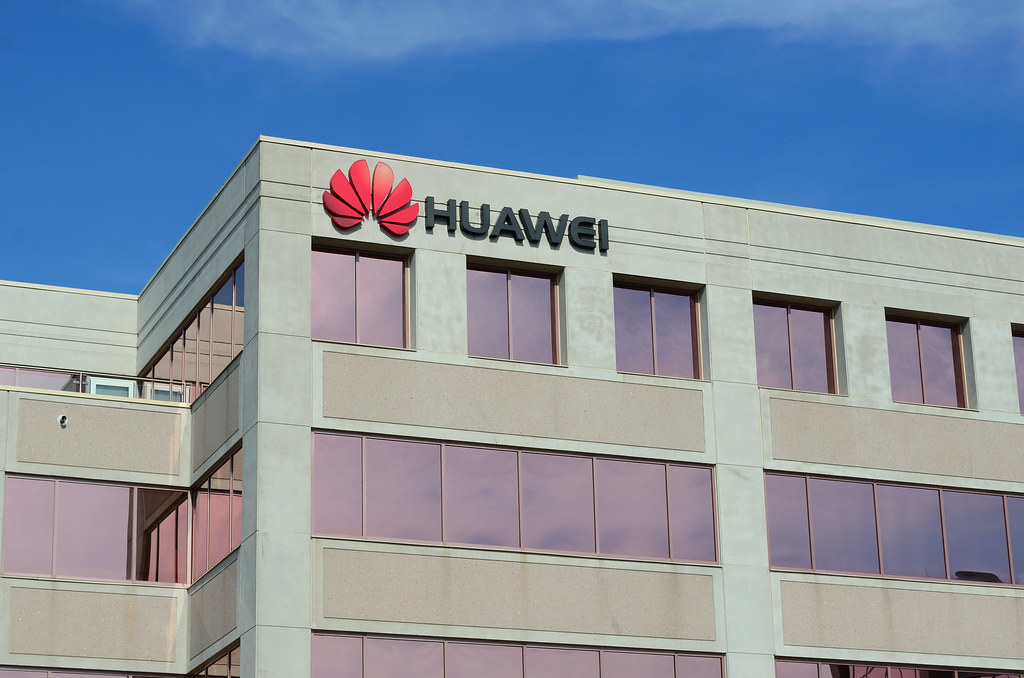
The scandal of the mobile 5G affair is not that the Europeans refused to give in to Trump administration pressure to cease all purchases from Huawei.  Who knows how bad the security issue is—the Trump people have no specific examples—but the main point is that we have no alternatives to propose.  We dropped the ball.  That’s the scandal.

The scandal is real.  Not only are there no 5G infrastructure products to recommend, but deployment of 5G equipment in our own networks is well-behind other countries.  (The TV ads for 5G are for limited and pre-standard implementations.)  That means we will be similarly late with the 5G applications that should be our bread and butter.  That’s an infrastructure problem.  Government is not doing its job.

This is happening all over the place.  Climate change is an obvious example.  The US has singularly low gasoline prices and no thought of carbon pricing.  For the auto industry we’re even rolling back fuel efficiency standards.  We’ve created an environment where US companies cannot use the US market to achieve world status.  Tesla—our shining light in this area—is the exception that proves the rule:  created with Obama seed capital and almost forced out of business.  The Chevy Bolt is a South Korean technology product.  China is already building a 21st century electrical backbone.  It’s all a great big 5G.

We ourselves have proved over and over again that government needs to lead—before there’s profit to be had.  Sure we’re now funding AI, but that’s late in the game.  By contrast the Energy Department research budget is nowhere near what’s needed:  next year—for the first time—we are funding work on in-network electrical power storage.  Research universities were specifically hit by Trump’s 2017 tax plan.

Dominant countries have a tendency to believe their position was given by God.  (My favorite example is the 17th century Brits who wasted fortunes looking for gold in South America, because they couldn’t believe God would have given it all to the Spanish!)  It’s all too easy to get complacent, and with the ever-more-powerful Evangelicals it’s even doctrine.  In the current technology environment, our ascendance could disappear in a heartbeat.  We’ve got to stop believing in our divine anointment (and also stop counting our aircraft carriers on defense).

Our business-minded leaders need a business metaphor.  As a country we’ve gotten ourselves stuck in a harvesting strategy—with all the benefits flowing (literally!) straight to the investors.   We’d better get back to reinvesting for growth.


Software

242729766_cc4d4f354b_b_google

This note is a follow-on the previous item about prosperity.  Software was mentioned there, but it deserves its own focus.

There isn’t enough discussion of software businesses.   That’s an important gap, because it lets people fantasize away the changes that are taking place in employment.  Without that discussion we can blame just about anything on globalization, and then believe tariffs will fix it.  Or we can talk about automation, and still think about unions and incremental retraining as the answer.  But that’s wishful thinking.

Software businesses are different.  There is essentially nobody doing production, so there is essentially no incremental cost of production.  Product cost is research and development.  As we noted before that tends toward monopoly businesses that are hard to tax and regulate.

We also mentioned the effect on employment.  It’s not that these companies don’t hire people.  Apple and Google are getting up toward 100,000 people.  But the vast majority of the jobs, well beyond development, require a high degree of technical sophistication.   Even sales and low-level support must deal with the technical sophistication of the products.  In a company like Amazon, with close to 600,000 people, there is a rigid distinction between the sophistication of the good jobs in headquarters versus the hordes of people filling boxes.  Our current technology leaders are all software companies, with all that entails.

But they’re not the only ones.  Globalization and automation are essentially equivalent ways of dealing with non-core functions.  More and more companies can think of themselves as software companies, designing products that can be produced either by machines or some arms-length operation that might just as well be.  In this it is important to recognize that outsourcing is itself a technology area.  Growth in outsourcing reflects how much easier and more reliable it has become. Production becomes machine-like.  That trend is not going away.

There are several types of conclusions to be drawn here.

–  For businesses, the real money is to be made in staying on top of the heap.  That’s the software model.  It will continue to be the direction of business focus, and with it profit margins have proved substantial.

– For employment it means that we have to be realistic about where good jobs are going to be.  There are two types:

  1. There will be technically sophisticated jobs of many sorts. But all will require a sophisticated educational background. We cannot stint on education.
  2. There will be jobs that can’t be easily outsourced or automated. These can be significant in number, but not necessarily in traditional areas. Example areas are human interactions, such as healthcare, daycare, or personal services.  There is also infrastructure, which is largely outside of controlled, automatable environments and not easily moved offsite.  Much of this work will require government intervention to get done.

– We can’t expect things to just work out.   Full employment is not going to produce good jobs for everyone.   We are supposedly living in economic heaven—lowest unemployment in years—but wages still have grown only barely beyond inflation.  And in that, things are far worse at the bottom than at the top of the income scale.  Unions should be strengthened, but they can only do so much about technology (both automation and outsourcing).  And tariffs always sound good, but they are extremely expensive ways to create jobs and historically do more harm than good.


In this world, if we want to avoid a declining two-tiered society of haves and have-nots, we have to recognize the role of government—not just to protect people but for national success.

– We have to do better than the current hodge-podge support of education and infrastructure.  Both are critical to the good jobs of the future.  Both require government commitment.

– We have to produce a system of taxation and corporate governance that supports business success without starving that environment that feeds it.  As Apple (among many others) has shown, software profits can be moved anywhere to avoid taxes.  The latest tax changes have actually that easier.

– There are serious problems that are simply outside the scope of the private sector to fix.  The most obvious example is climate change, where we are not only ignoring not only the threat but also the business opportunities it presents.

– We have to understand roles for people in making it happen.

This isn’t actually radical.  It’s closer to the economy we had in the 1950’s and 60’s, when government supported education and research, and businesses reinvested earnings.  We just have to stop believing in good fairies.  There are no miracles solutions delivered by the private sector or anyone else.  We collectively have to provide the environment for both business success and the well-being of the population.

That is a big job, and we’d better start planning for it.  Heaven helps those who help themselves.