It’s common to speak of our current politics as a crisis of democracy. We still have some features of democracy, but it doesn’t really work that way. So the question that tends to get asked is how to address issues with our democracy to make it better.
If we’re going to fix things, it’s important to recognize that’s not quite right. We don’t have a democracy anymore, and the government works exactly as intended.
The first thing to emphasize that the functional Constitution is not a document; it is a construct enforced by the Supreme Court. The law is what the Court says it is. There are no constraints on its interpretations, and in our current environment they don’t necessarily even give reasons for decisions.
Our current Supreme Court was put together over decades by the Koch organization with the objective of creating an authoritarian state, a dictatorial oligarchy for the benefit of big business and rich people. This is no wild conspiracy theory—Jane Mayer’s Dark Money from 2016 documents what has always been hidden in plain sight. The Kochs recognized early on they could take over the country through the Court, and they put together an organization funded by oligarchs to get there. Their project produced Citizens United in 2010 and was essentially complete with the death of Ruth Bader Ginsberg in 2020. They aren’t fans of the whole Trump program–not tariffs for example–but the tax cuts and cuts in government services excuse all other sins.
They created and managed the Federalist Society and nurtured a community of lawyers to do the work. All six so-called conservative justices have had careers in their service. The Koch organization at times has had a bigger operataing budget than the Republican Party. They created institutes and named professorships in law schools. They have an organization to provide text for bills in Congress. They recognized the extreme importance of the 2010 midterm state elections, because of redistricting after the 2010 census combined with new powers under the Citizens United Supreme Court decision. With the demise of spending limits they put unheard-of money into state-level campaigns and created the gerrymandering problems we have today.
(As a Massachusetts resident what I remember is the 2010 Scott Brown Senate election. You couldn’t turn on the television with seeing an ad from a PAC named something like “The Committee to Protect Social Security”. No one understood the avalanche of new money. That election effectively made Obama a lame-duck President–killing his filibuster-proof majority in the Senate, just as the emboldened Republican Party announced it would block all Presidential initiatives in the service of a Republican return to power. Citizens United was an effective anti-democratic tool from day 1.)
We now have the government they wanted—dictatorial and ready to be bought. What we call corruption is intended behavior. It’s how the powers-that-be get what they want.
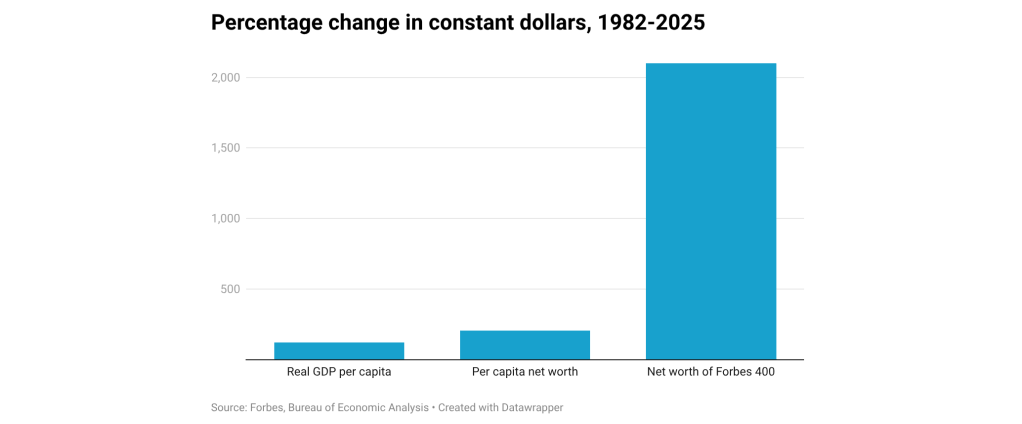
Changing this is not going to be easy. As Paul Krugman in particular has pointed out, the wealth and power of our domestic oligarchs have reached unprecedented levels. Also by unlucky circumstance they now own a large chunk of domestic media channels—CBS and soon CNN together with Musk’s X plus the long-term ally Fox News.
So what is going on is not one or another problem with democracy. We’ve experienced a well-planned and carefully-executed coup. They’re pillaging the country. As it turns out they’re also making a mess of things, even for their own interests, but thus far that hasn’t mattered to them. And they’ve got the other media too scared to offer anything but token resistance.
The 2026 election is of course critical. It can’t fix everything, but it would give a basis to start. If we can win there, we can think about 2028 and the Court. Otherwise all we can say is that 250 years was a good run RIP.