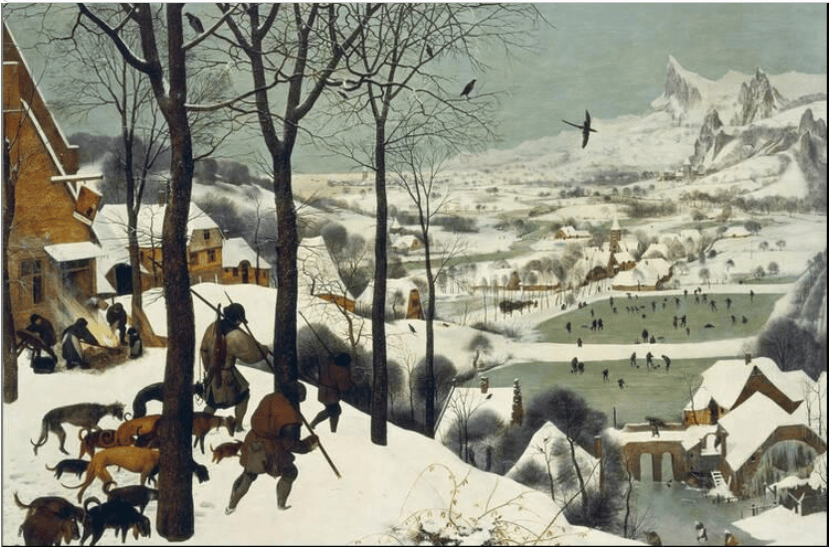
This starts with the picture. Like many other people it seems I’ve always known Brueghel’s much-reproduced “Hunters in the Snow”. There’s something oddly comforting in this end-of-day scene with hunters returning and villagers skating in the background (even though it isn’t clear the hunt was a success). The unusual part was that someone I was visiting had a full-scale, high-quality reproduction mounted on the wall. To my surprise the picture had much more to say.
The first thing that stood out was the importance of the flying bird with outstretched wings. Somehow the extra detail and perspective of the picture gave the bird a special role. It flies in the foreground, not only calling attention to itself, but also creating the impression of an enormous space behind it, above and surrounding the population on the ice. That huge volume of space became a kind of symbol of life’s potential, the infinite possibilities of the world we humans have been granted. The bird itself was free and soaring. It was carefully drawn, with individual feathers indicated, and with wings at right angles, in a kind of cross. That gave it a sort of religious significance, but not a Christian one. This was a humanist document about the world that could be. A most amazing thing.
But that’s not the end of this story. Brueghel’s period of artistic achievement was short, not much more than a decade. “Hunters in the Snow” was at a high point in his career. He lived in a brutal period of religious wars and by reports had to destroy some works to protect himself and his family. Near the end he painted another, smaller painting with a less comforting world view: “The Magpie on the Gallows”. Here humanity has been shoved aside in favor of an illuminated twisted gallows with a cross behind it. A bird flies far away in a lonely landscape. This is the cold, steely world humans have made from the wonders they received. The magpie of the title sits atop the scaffold as a small remaining bit of hope.
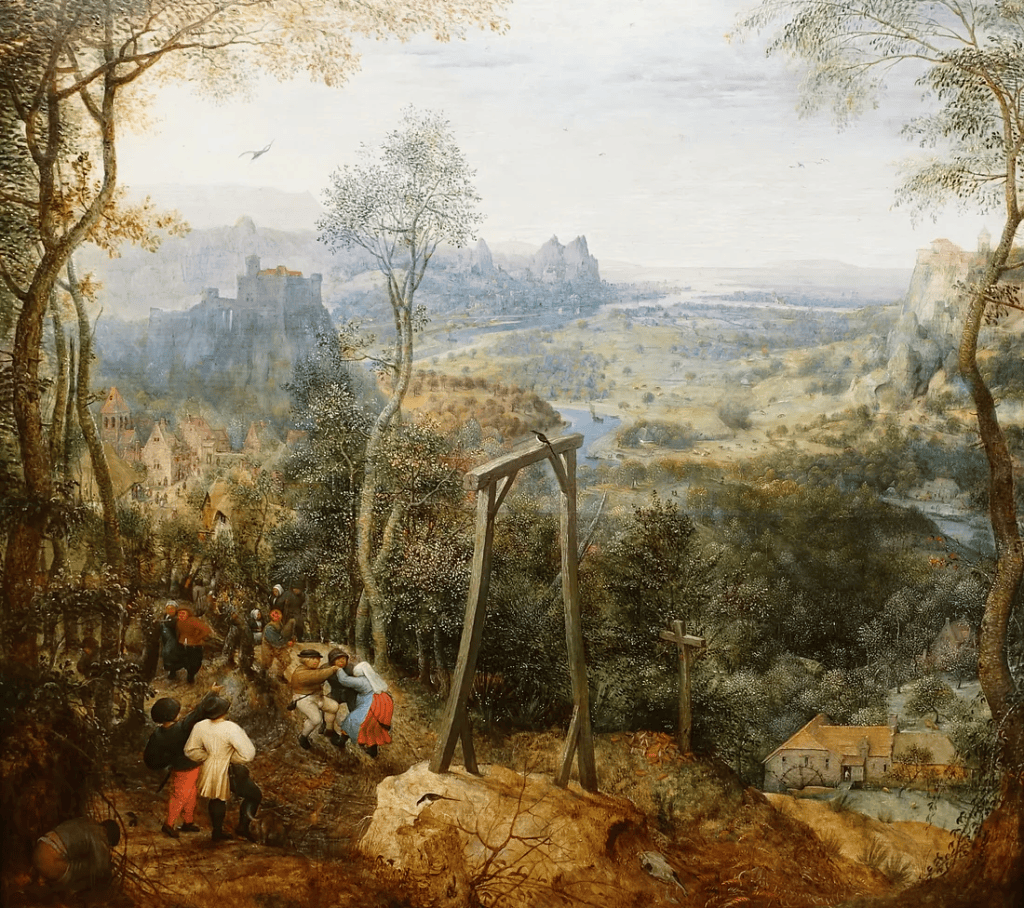
This is a message sent across centuries in the only form possible. We still have that same choice. We can build a humane world or a world of autocrats and conflict. And if we can’t get that right, there may be no one left to see the message.

